
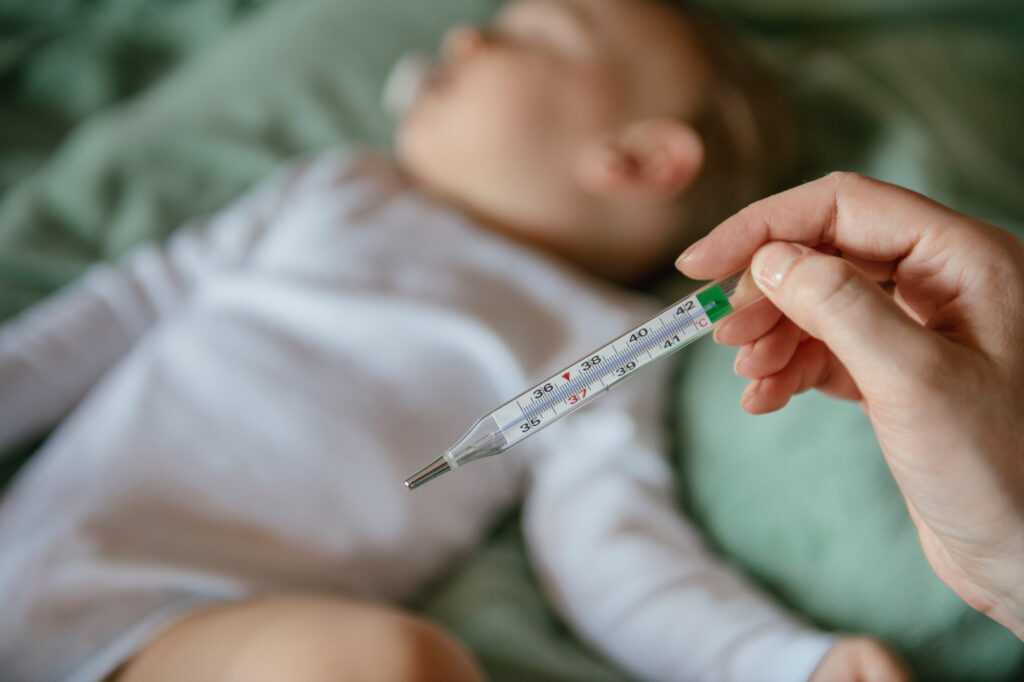
A baby’s fever is not always urgent, but age, timing, and other symptoms matter a lot.
A baby’s fever is assessed using age, temperature, measurement method, and overall condition. A temperature of 38°C (100.4°F) or higher in a baby younger than three months needs prompt medical assessment; follow pediatric advice for other ages.
What to do in practice
Measure with an appropriate thermometer and record the time, value, and method. In an urgent situation, contact a clinician or emergency service first. Do not choose medicine or calculate a dose through the app.
What to keep in mind
Measure temperature using an age-appropriate method
Begin with a measurable fact such as temperature, time, a food, or a visible reaction. This helps you describe the situation accurately.
Use concrete details such as temperature, number of episodes, duration, and visible changes. Avoid explaining the cause unless a clinician has identified it.
Record the reading, time, and accompanying symptoms
Then add the order of events and changes in condition. Do not use a journal to determine a diagnosis or urgency on your own.
For food or a reaction, record the food, approximate amount, and time. For fever, include the measurement method. These details often help more than a broad description.
Consider your baby’s age and clinical guidance
If care is needed, seek it first. You can complete the notes later, after your baby has been assessed by a professional.
If a professional gives you an action plan, save and follow that plan. A general article cannot account for your baby’s age, diagnoses, and health history.
How to use your observations
Add short notes when it is convenient. A date, useful context, and change over time often help more than a long description of one day. Before an appointment, review the history and choose the questions you want to discuss.
You do not need to complete every field every day. Choose the notes that answer the article’s question and will be useful later. When an observation repeats, use consistent wording so changes are easier to see without adding assumptions.
What to prepare for a checkup
Before an appointment, choose the notes that best explain the question: when a change began, what happened around it, whether it repeated, and what has changed since. Add a medicine or supplement list when relevant and prepare two or three questions you want answered.
What an app cannot determine
A tracker cannot determine diagnosis, treatment, or urgency. If your baby needs attention, contact medical care first and follow professional instructions.
When to seek professional help
A temperature of 38°C (100.4°F) or higher in a baby under three months requires urgent medical assessment; at any age seek urgent care for breathing difficulty, seizures, marked lethargy, or deterioration.
Quick answers
How often should I add notes
Add a note when there is new information or something you follow changes. Daily tracking is only necessary when a professional recommends it or that rhythm genuinely works for you.
What if I missed several days
Continue from today. You do not need to reconstruct details you are unsure about. If an approximate date matters, label it as recalled from memory.
Which notes should I show a clinician
Choose notes that show when the question began, repeated, or changed, plus relevant medicines, supplements, and prior advice. Your clinician can tell you which observations are worth continuing.
How Olisora can help
Olisora keeps observations, reactions, and questions for your clinician together in one app.